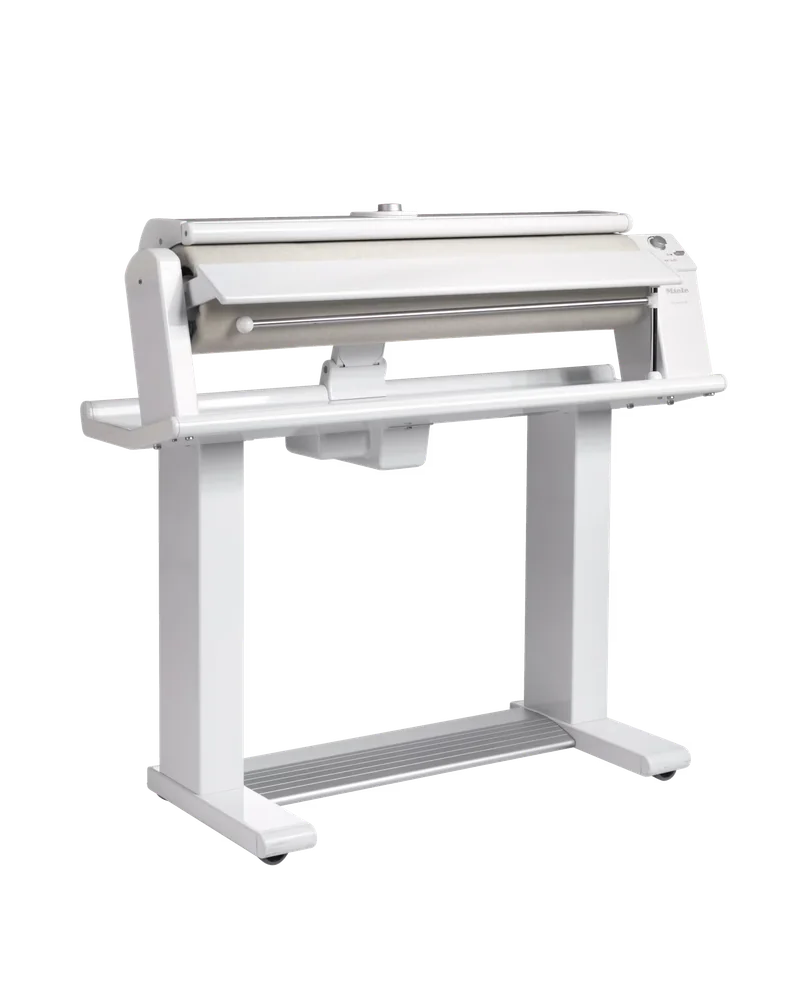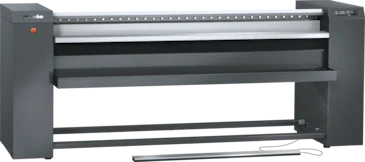
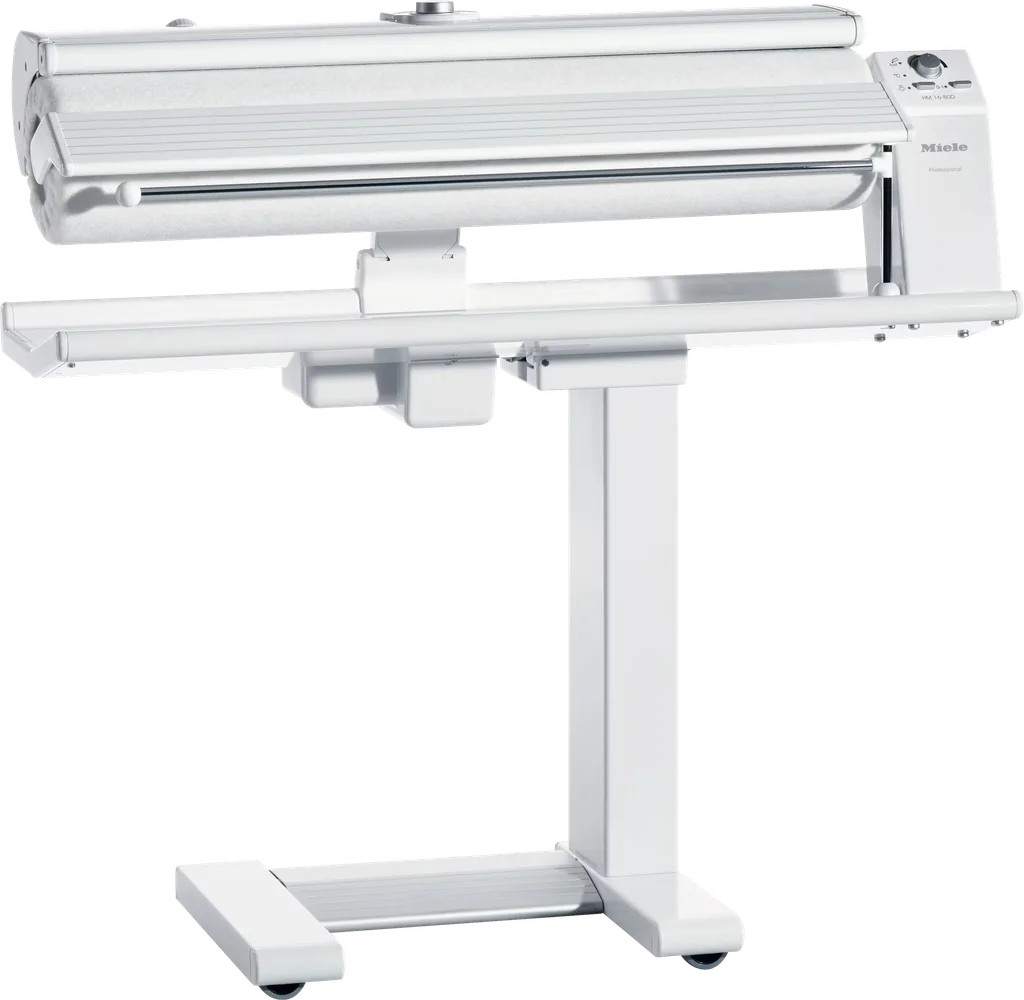
Miele HM 16-80 D
Compact ironer, 830 mm working width, with steam function
- Working width
- 830 mm
- Roller
- 160 mm
- Output
- 13 kg/h

Professional ironers for hotels, laundries and institutions where larger quantities of flat textiles must be finished in an even, predictable process.
9 products
No products match the selected filters.
Compact, wall-mountable ironers for smaller quantities of flat textiles.
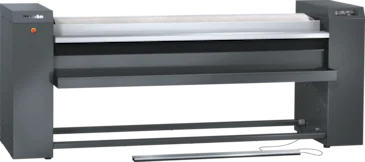
Compact ironer, 830 mm working width, with steam function
Compact ironer, 830 mm working width
Trough ironers with 210–250 mm rollers for medium daily volumes.
Trough ironer, 1000 mm working width
2 variants: without EPR extraction · with EPR extraction
Details – Miele PRI 210Trough ironer, 1400 mm working width
Trough ironer, 1660 mm working width
4 variants (roller covering, feed)
Details – Miele PRI 217High-output trough ironers with 300–365 mm rollers, also available with feed belt and return feed.
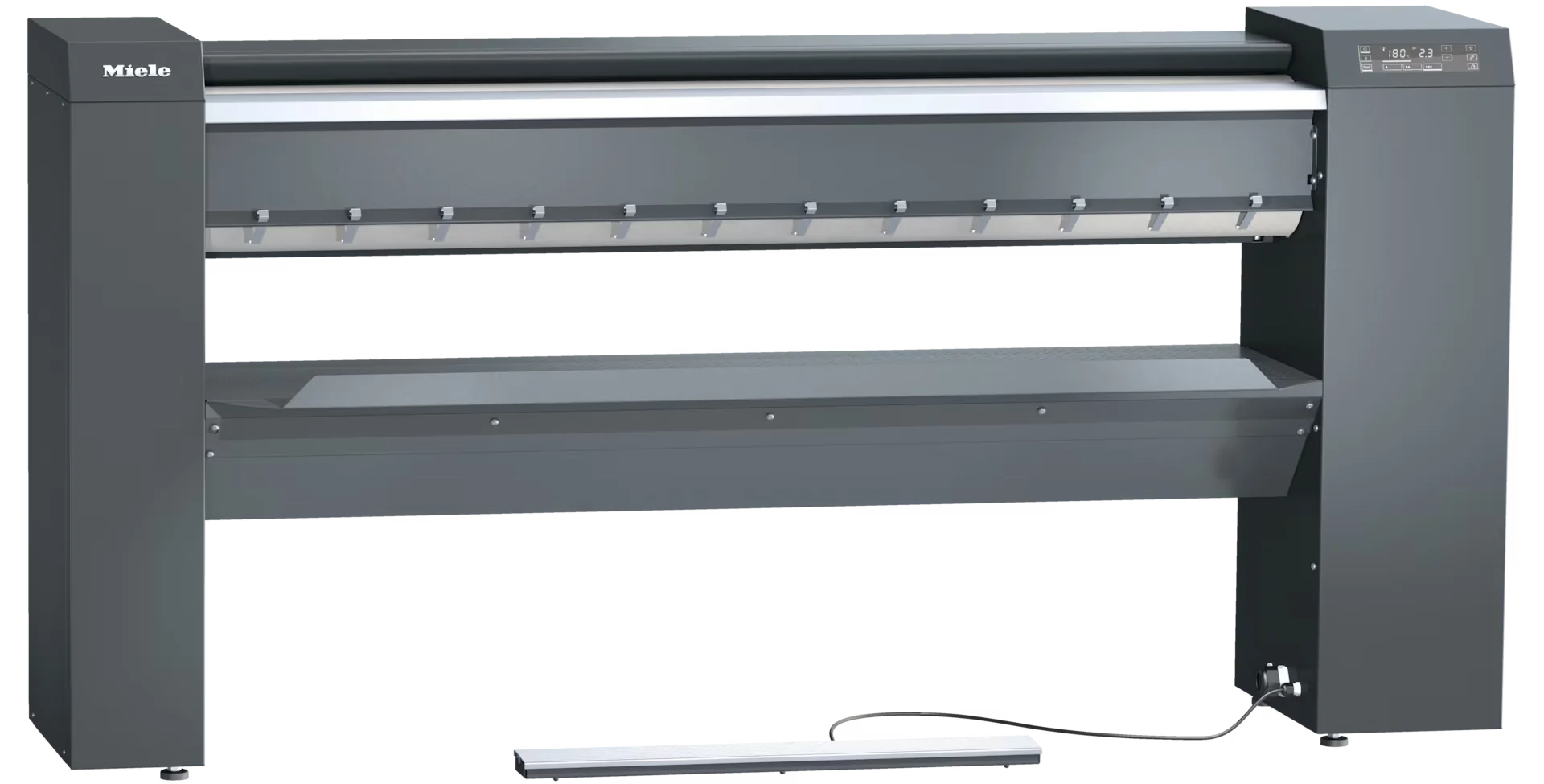
Trough ironer, 1750 mm working width
6 variants (heating, roller covering, feed belt, return feed, power supply)
Details – Miele PRI 318Trough ironer, 1750 mm working width
3 variants (heating, roller covering, feed belt, power supply)
Details – Miele PRI 418Trough ironer, 2040 mm working width
5 variants (heating, roller covering, feed belt, return feed, power supply)
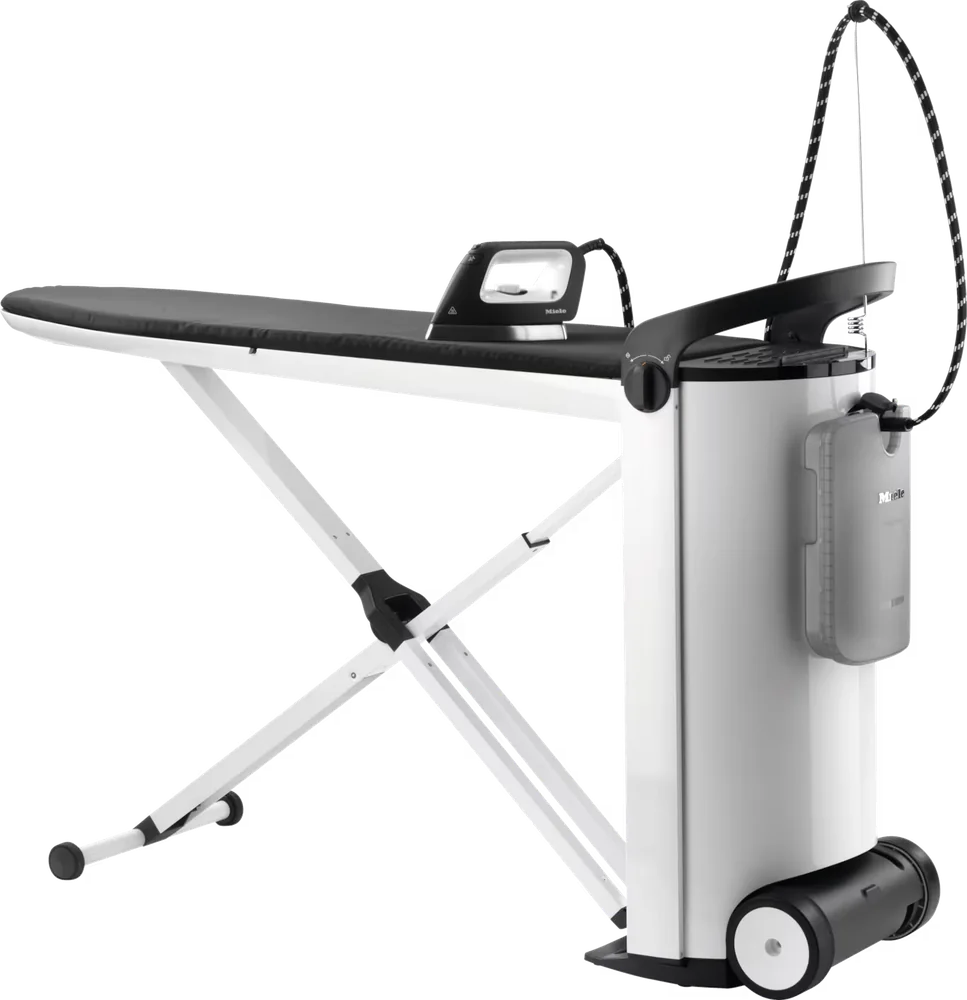
Details – Miele PRI 421Professional steam ironing with an active ironing table – a complement to the ironer for shaped textiles.
Professional steam ironing system
When choosing the right ironer, it is not only the size of the machine that counts. The daily textile volume, working width, required kg/hour output, operator workflow and the capacity of the preceding laundry steps together determine the ideal solution.
The Miele Professional ironers below offer solutions for different output and working-width requirements. We recommend choosing the specific model with knowledge of the daily textile volume and the laundry process as a whole.
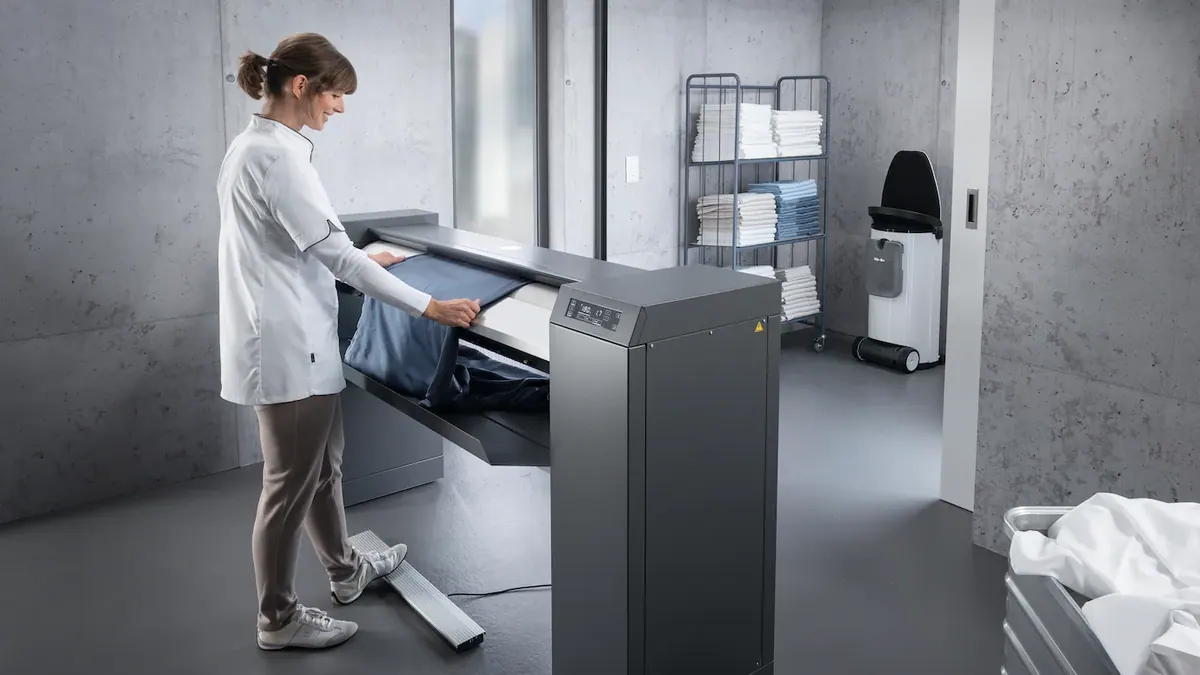
An ironer becomes important mainly when large quantities of flat textiles – such as bed linen, table linen or similar materials – regularly need uniform, efficient finishing. Finishing capacity must likewise be matched to washing and drying output.
A commercial ironer can only work efficiently if its output matches the whole laundry. If washing and drying are faster than finishing, finished textiles pile up before ironing. If, on the other hand, the ironer is significantly oversized, the investment may remain underused.
When selecting Miele Professional ironers, we therefore don't look at a single technical figure but at the daily kg volume, textile sizes, available operating time and the handling process together.
When significant quantities of flat textiles regularly need professional finishing, and manual or lower-output solutions no longer match the required capacity.
A performance figure specified by the manufacturer that helps size the machine to the laundry's daily textile flow; the actual result also depends on operating conditions.
It determines what size of flat textiles can be processed efficiently on the machine.
No. It must be sized together with the washing and drying capacity, the type of textiles and the operator workflow.
A few basic details are enough for an initial assessment of the right capacity: what textiles or dishes you process, in what quantity, how many hours a day you operate, how much space is available and which utilities are on site.

We always use the cookies required for the site to work. Cookies that measure site traffic are only set with your consent. You can change your decision at any time via the Cookie settings link in the footer. Details in our privacy policy (in Hungarian).